The 50/30/20 Budget Rule: A Simple Framework That Actually Works
If you’ve ever tried to track every single expense down to the penny, you know how exhausting budgeting can be. Most people give up within a month. The 50/30/20 rule succeeds because it’s simple enough to stick with long-term.
Why Most Budgets Fail (And This One Doesn’t)
Traditional budgeting requires categorizing every purchase into dozens of categories: groceries, gas, dining out, entertainment, personal care, clothing… the list goes on. This level of detail works for about 3% of people. For everyone else, it’s a recipe for burnout.
The 50/30/20 rule works because it reduces complexity. Instead of tracking 20+ categories, you track 3. Instead of budgeting every dollar, you follow simple percentages. It’s the difference between a rigid diet plan and general healthy eating—one feels like punishment, the other feels sustainable.
How the 50/30/20 Rule Works
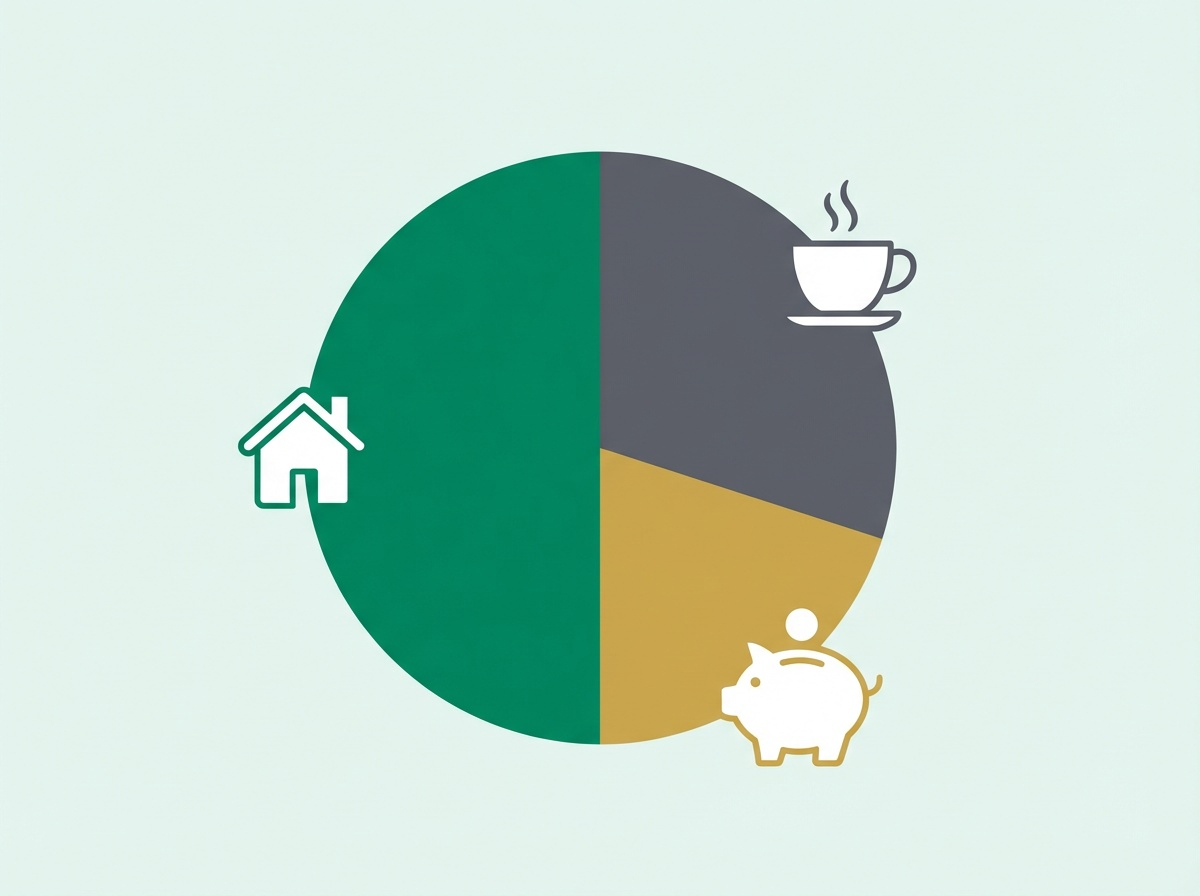
This budgeting framework, popularized by Senator Elizabeth Warren in her book “All Your Worth,” divides your after-tax income into three buckets:
50% for Needs
These are expenses you can’t avoid. If you lost your job tomorrow, you’d still owe these bills:
- Housing (rent or mortgage)
- Utilities (electricity, water, gas, internet)
- Groceries
- Transportation (car payment, insurance, gas, public transit)
- Insurance (health, auto, renters/homeowners)
- Minimum debt payments
- Childcare (if you work)
30% for Wants
Everything that makes life enjoyable but isn’t essential for survival:
- Dining out and takeout
- Entertainment (streaming services, concerts, movies)
- Hobbies and recreation
- Shopping (clothing, electronics, home decor)
- Gym memberships
- Vacations
- Non-essential subscriptions
20% for Savings and Extra Debt Payments
Money that builds your future financial security:
- Emergency fund contributions
- Retirement account contributions (401k, IRA)
- Debt payments beyond the minimum
- Investment accounts
- Savings for major purchases
Step-by-Step Implementation
Step 1: Calculate Your After-Tax Income
This is your monthly take-home pay—what actually hits your bank account after taxes, health insurance, and 401k contributions are deducted.
If you’re a W-2 employee: Look at your paycheck. The net pay or take-home amount is your starting number. Multiply by pay periods per month (2 if bi-weekly, accounting for two months per year with 3 paychecks).
If you’re self-employed: Take your gross income and subtract estimated taxes (typically 25-30% depending on your bracket) and health insurance costs.
Example: You take home $3,500 per paycheck, paid twice monthly = $7,000 monthly after-tax income
- 50% for Needs: $3,500
- 30% for Wants: $2,100
- 20% for Savings: $1,400
Step 2: Categorize Your Current Spending
Review your last 3 months of bank and credit card statements. Go through line by line and sort expenses into the three buckets: Needs, Wants, and Savings.
Gray areas: Some expenses blur the lines. Here’s how to handle common confusion:
- Cell phone: Need (you require it for work and emergencies)
- Internet: Need (essential for modern life)
- Basic groceries: Need | Fancy groceries: Want
- Work clothes (basic): Need | Fashion shopping: Want
- Car payment: Need | Luxury car payment: Partially want
Don’t overthink it. Perfection isn’t the goal—awareness is.
Step 3: Calculate Your Current Ratios
Add up each category and divide by your monthly income. Most people are shocked by what they find:
- Needs are often 60-70% (too high)
- Wants are often 25-35% (fine)
- Savings are often 5-10% (way too low)
Step 4: Make Strategic Adjustments
If your ratios are off, you have two levers: increase income or decrease spending. Here’s where to start:
If needs exceed 50%:
- Housing is the biggest factor. If you’re spending more than 30% on rent/mortgage, consider moving or getting a roommate
- Transportation is second. Can you sell an expensive car for something reliable but cheaper? Use public transit?
- Review insurance policies. Shop around annually for better rates
- Refinance high-interest debt to lower minimums
If wants exceed 30%:
- Track for one month without judgment to identify patterns
- Cancel unused subscriptions (average person has 4 they don’t use)
- Implement a 24-hour rule for purchases over $50
- Cook at home 5 nights per week instead of 3
If savings are below 20%:
- Set up automatic transfers on payday—pay yourself first
- Start with whatever you can (even 10%) and increase 1% each quarter
- Apply all raises and bonuses directly to savings until you hit 20%
Common Questions
“What if my needs are already over 50%?”
This is common, especially in high cost-of-living areas. Start with awareness. You might need a 60/20/20 split temporarily while you work on reducing fixed costs or increasing income. The percentages are guidelines, not laws. Progress matters more than perfection.
“Should I count my 401k contributions as savings?”
If 401k contributions are automatically deducted from your paycheck, you can either: (A) count your after-contribution pay as your income, or (B) add contributions back to your income and count them as savings. Just be consistent. Option A is simpler for most people.
“What about irregular income?”
Freelancers and commission-based workers should use their lowest typical monthly income as the baseline. In good months, apply the excess to savings. Build a larger emergency fund (6+ months) to handle income volatility.
The Bottom Line
The 50/30/20 rule works because it’s sustainable. You don’t need to track every coffee or feel guilty about enjoying life. You just need three numbers that keep you roughly on track toward financial security.
Start by figuring out your current ratios. Then make one small adjustment. That’s it. Small, consistent progress beats dramatic unsustainable change every time.