Index Funds Explained: The Simplest Way to Build Long-Term Wealth
Warren Buffett, arguably the greatest investor alive, has one piece of advice for regular people: buy index funds. In his 2013 letter to shareholders, he instructed that 90% of his wife’s inheritance be invested in a low-cost S&P 500 index fund. If a billionaire investor thinks index funds are the answer, they’re worth understanding.
What Is an Index Fund?
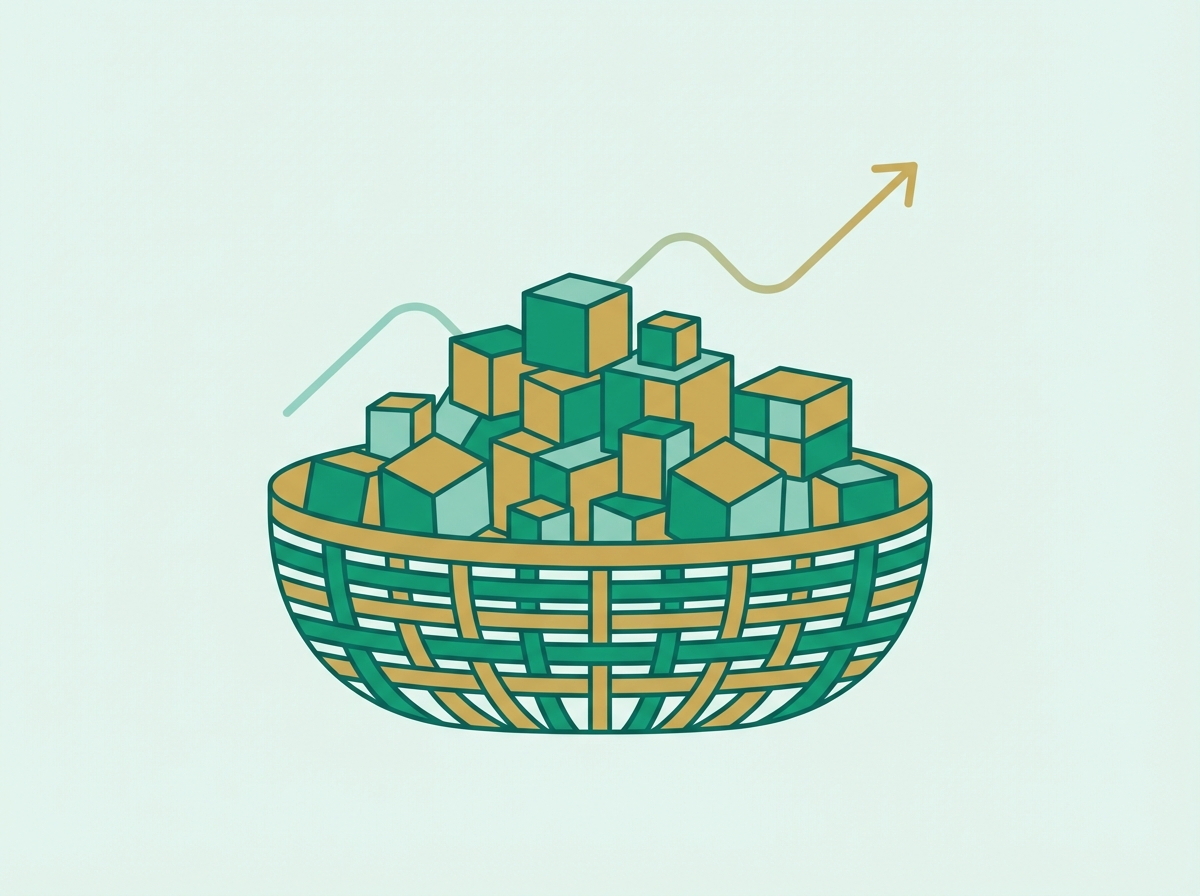
An index fund is a type of investment that holds every stock (or bond) in a specific market index. Instead of trying to pick winning stocks, an index fund simply owns all of them in proportion to their market value.
The most common example: an S&P 500 index fund owns shares of all 500 companies in the S&P 500 index—Apple, Microsoft, Amazon, Johnson & Johnson, JPMorgan Chase, and 495 others. When you buy one share of an S&P 500 index fund, you own a tiny piece of all 500 companies.
Why Index Funds Beat Most Professional Investors
This sounds too simple to work, but the data is overwhelming. The SPIVA scorecard, which tracks professional fund manager performance, consistently shows that over 15-year periods, approximately 90% of actively managed funds fail to beat their benchmark index. Over 20 years, it’s closer to 95%.
The reasons are straightforward:
- Costs eat returns. Actively managed funds charge 0.5-2.0% annually in fees. Index funds charge 0.03-0.20%. That fee difference compounds dramatically over decades
- Trading costs add up. Active managers buy and sell frequently, generating transaction costs and tax events. Index funds rarely trade
- Markets are efficient. With millions of professionals analyzing every stock, it’s extremely difficult to consistently find mispriced securities. Most “alpha” (market-beating returns) is attributable to luck rather than skill
A 1% annual fee difference doesn’t sound like much. But on a $500/month investment over 30 years at 8% average returns, that 1% fee costs you approximately $200,000 in lost wealth. That’s money paid to a fund manager who probably didn’t beat the index anyway.
Types of Index Funds Worth Knowing
Total U.S. Stock Market
Holds virtually every publicly traded U.S. company—large, mid, and small cap. About 3,500-4,000 stocks. This is the broadest U.S. stock diversification you can get in a single fund.
- Vanguard: VTI (ETF) or VTSAX (mutual fund)
- Fidelity: FSKAX
- Schwab: SWTSX
S&P 500
Holds the 500 largest U.S. companies. Very similar performance to total market funds since large companies dominate both. The most popular index in the world.
- Vanguard: VOO (ETF) or VFIAX (mutual fund)
- Fidelity: FXAIX
- Schwab: SWPPX
Total International Stock Market
Holds stocks from developed and emerging markets outside the U.S.—Europe, Asia, Latin America, and more. International diversification protects against the possibility that the U.S. market underperforms for extended periods (which has happened historically).
- Vanguard: VXUS (ETF) or VTIAX (mutual fund)
- Fidelity: FTIHX
- Schwab: SWISX
Total Bond Market
Holds a broad mix of U.S. government and corporate bonds. Bonds provide stability and income, balancing the volatility of stocks. As you get closer to needing your money, increasing your bond allocation reduces risk.
- Vanguard: BND (ETF) or VBTLX (mutual fund)
- Fidelity: FXNAX
- Schwab: SCHZ
ETF vs. Mutual Fund: What’s the Difference?
You’ll notice each index has both an ETF and mutual fund version. They hold the same stocks and perform nearly identically. The differences:
- ETFs trade like stocks throughout the day, can be bought in fractional shares at most brokerages, and are slightly more tax-efficient
- Mutual funds trade once per day at market close, may have minimum investment requirements ($1,000-$3,000 at some brokerages), but allow automatic investment of exact dollar amounts
For most people, it doesn’t matter which you choose. Pick whichever is easier at your brokerage. At Fidelity and Schwab, mutual funds often have no minimums. At Vanguard, ETFs are more accessible for small investors.
How to Build a Portfolio with Index Funds
The simplest approach is a “three-fund portfolio”:
- U.S. total stock market index fund (60-70%)
- International stock market index fund (20-30%)
- Bond index fund (0-20%, increasing as you approach retirement)
That’s it. Three funds, properly allocated, give you exposure to thousands of companies across the globe. Rebalance once per year to maintain your target allocation.
If that’s still too complicated, just buy a target-date fund. It’s a single fund that automatically maintains a diversified portfolio and adjusts as you age. Completely reasonable choice for anyone who wants simplicity.
Common Questions About Index Funds
What about sector funds or themed ETFs?
Avoid them. Tech funds, clean energy funds, AI funds—these are marketing, not investing strategy. Broad index funds already hold these sectors in proportion to their market value.
Should I wait for a market dip to invest?
No. Time in the market beats timing the market. Studies consistently show that lump-sum investing beats waiting, and dollar-cost averaging (regular automatic investments) removes the timing decision entirely.
Are index funds safe?
They’re safe from fraud and company failure (you own hundreds of companies). They’re not safe from market downturns—your portfolio will drop when the market drops. But over any 20-year period in history, the market has always recovered and grown.
The Bottom Line
Index funds are the closest thing to a “correct” answer in investing for most people. They’re cheap, diversified, tax-efficient, and historically outperform the vast majority of professional stock pickers.
Pick a total U.S. stock market index fund, set up automatic contributions, and ignore the financial news. Over decades, this simple approach will likely outperform most complicated strategies—and it requires almost no effort. That’s the beauty of index investing.